A guide to Alameda ADU building regulations in California
Learn about local zoning guidelines, financing options, and getting started with building a custom ADU in Alameda, California.

Introduction to ADUs
A quick overview of what a backyard home offers for you, your family, and your property.
An ADU, or Accessory Dwelling Unit, is a secondary living space on your property that provides complete independence with its own living, sleeping, eating, cooking, and sanitation facilities. ADUs are also known as guest houses, in law suites, in law units, backyard cottages, and granny flats, and are built on the same lot as the primary residence or primary home. They can be attached ADUs that are connected your main house, or created as conversion ADUs by repurposing existing space, such as a garage conversion, often from existing single family homes. Alternatively, they can be built as new detached units.
There are many benefits to building an ADU, both practically and financially. It’s often more affordable than traditional homes since it leverages existing property and infrastructure, avoiding costly new developments. An ADU can provide as much living space as a modern apartment, making efficient use of your property. ADUs can provide extra income through rental opportunities, support affordable housing, and help stabilize neighborhoods by increasing housing options. They can generate rental income to offset mortgage payments, offer a private space for family members like aging parents, diversifies housing options, and increase your property’s market value. Plus, it’s eco-friendly, reducing the need for new construction and supporting sustainable living, especially in areas that are in a housing crisis.
ADUs are secondary to the primary dwelling unit and are located on the same property or same lot as the main home, providing independent living while remaining connected to the primary residence.
Key Benefits of a Backyard Home
Increases Property Value | A well-built and thoughtfully designed ADU can boost the market value of your property, often 25%- 35% higher in urban areas. |
|---|---|
Provides Housing for Family Members | Creates additional space for your family, regardless of their age or needs. |
Expands Current Living Space | Adapts to needs like home office, guest house, or studio, and can include other spaces such as kitchens, bathrooms, or living areas. |
Generates Rental Income | Provides passive income, offsetting costs or funding expenses. |

Overview of ADU Construction Methods
There are a few of different ways that your ADU can be constructed
When building an Accessory Dwelling Unit (ADU), you’ll need to decide on the construction method. Common options include traditional, prefabricated (prefab), modular, and panelized construction, each with its own pros and cons. There are also several types of ADUs to consider: detached ADUs (standalone buildings separate from the main residence), attached ADUs (units built by adding onto or transforming existing structures like walls, basements, or garages), and conversion ADUs (created by converting existing spaces within a home or accessory buildings such as garages or sheds). Junior ADUs (JADUs) are smaller units, often up to 500 square feet, typically attached or converted from existing space within a single-family home, sharing some facilities and subject to owner-occupancy requirements. ADUs can also be added to a multi family building, not just single family homes.
- Traditional Construction involves building from scratch on-site, offering high customization but often taking longer and costing more.
- Prefabricated Construction means the ADU is built in a factory and delivered, providing speed and cost savings but with limited design flexibility.
- Modular Construction builds sections in a factory for on-site assembly, balancing speed and customization.
- Panelized Construction uses pre-built panels assembled on-site, offering a middle ground in cost and time.
When converting existing structures, buildings such as garages or sheds can be repurposed into ADUs, maximizing the use of your property. At Type Five, our approach combines the best of both worlds, offering you design flexibility with the cost savings and convenience of prefab. Here are some of the notable features:
- Customizable: Every Type Five ADU is customizable online. You can select the size, color, layout, amenities, bedrooms, finishings, and more without paying thousands of dollars in design fees.
- Turn-Key Experience: Thanks to our streamlined process, you can ditch the chaos and stress of managing the complexities of building your backyard home. We’ll draw up your plans to meet building codes, get them approved by the city, and manage construction so you don’t have to. Our platform allows us to be your project's architect and general contractor, saving you enormous time and money while giving you the peace of mind that you're getting an amazing service and product.
- Efficient Construction Timelines: A traditionally built ADU can take dozens of subcontractors and operate under a more bespoke process to get your ADU built. We've streamlined the number of contractors involved, and run a repeatable, consistent process for every home we build. You can expect clear timelines, little to no back and forth, and weeks instead of months of construction on your property.
- Transparent Pricing: We guarantee your price right in our design process before you even submit a deposit. You can say goodbye to financial surprises & unexpected “change orders” because every project comes with a guaranteed maximum price before the building starts. This means you can accurately budget for the other things in your life… like your retirement or that vacation you’ve been thinking about!
What’s the bottom line? If you want a backyard home but don’t want to deal with the hassle and expense of traditional construction, then prefabricated/modular construction is the way to go. And if you want the convenience of prefab with the flexibility of custom design, then we’ve got your back.
The Process
As a property owner, how an ADU gets built will vary based on who you choose as your partner, but here are the general phases. The ADU development process involves several phases, from initial planning to completion, and each ADU project is unique. Understanding the development process helps ensure your ADU development meets your goals and complies with local regulations.
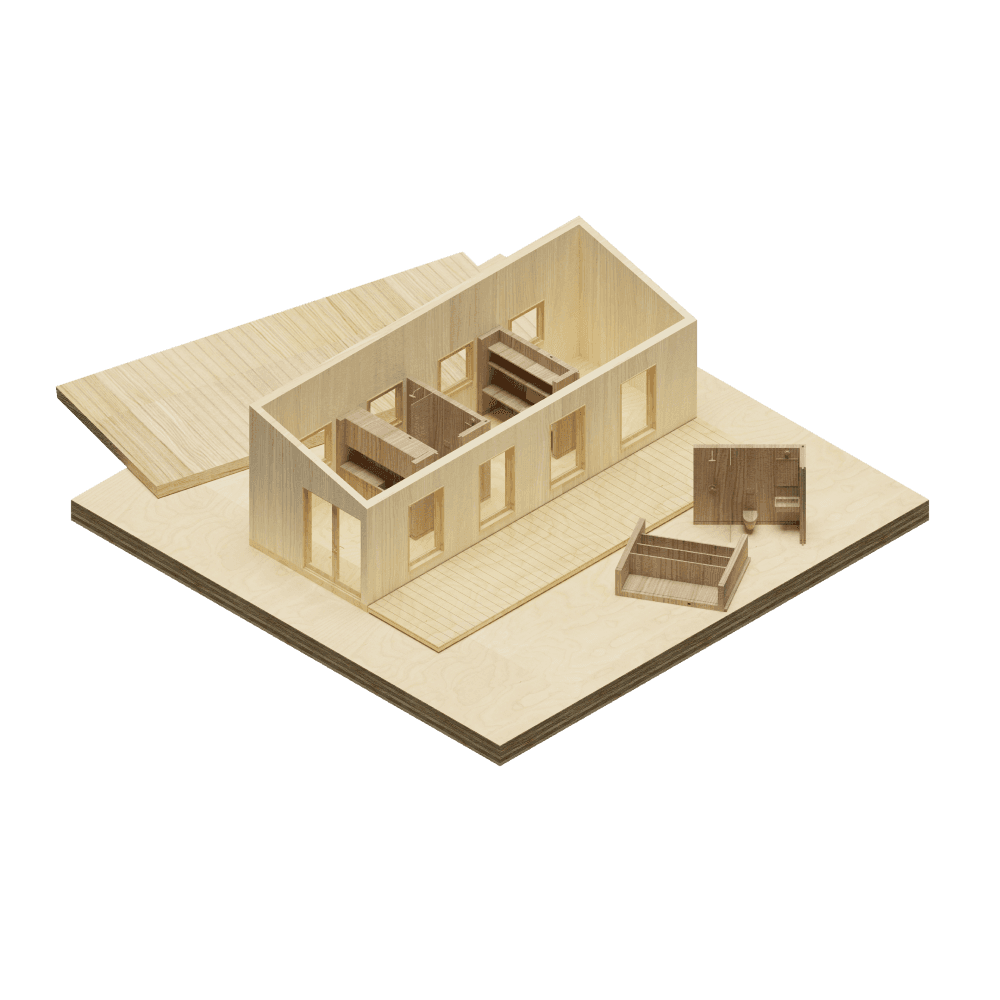
- A site feasibility study will help determine what can be built and where.
- Exploration and refinement of the interior layout
- Selection of finishes and materials
- Finalization of design plans
- Preliminary budgets and timelines assembled for review
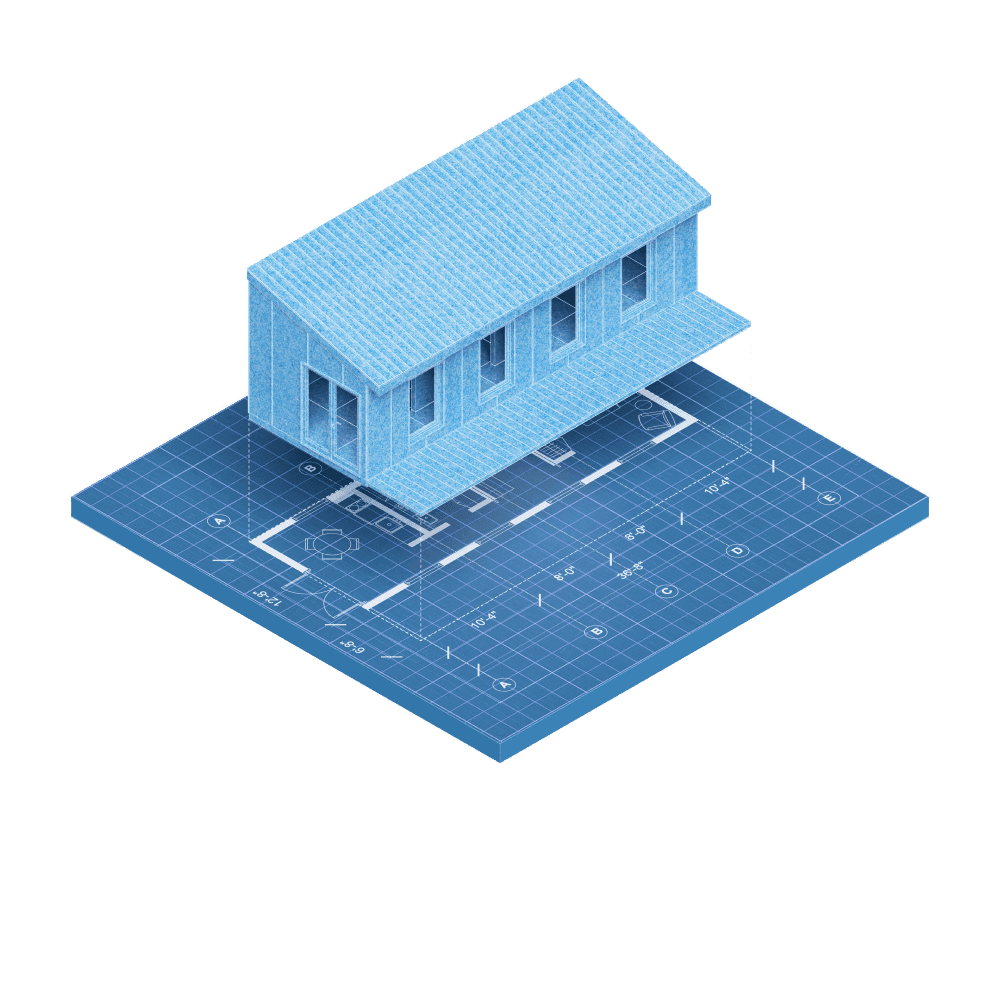
- Preparation of permit documentation
- Submittal to local building department
- Addressing any inspection comments
- Receiving permit approval
- Pre-construction planning
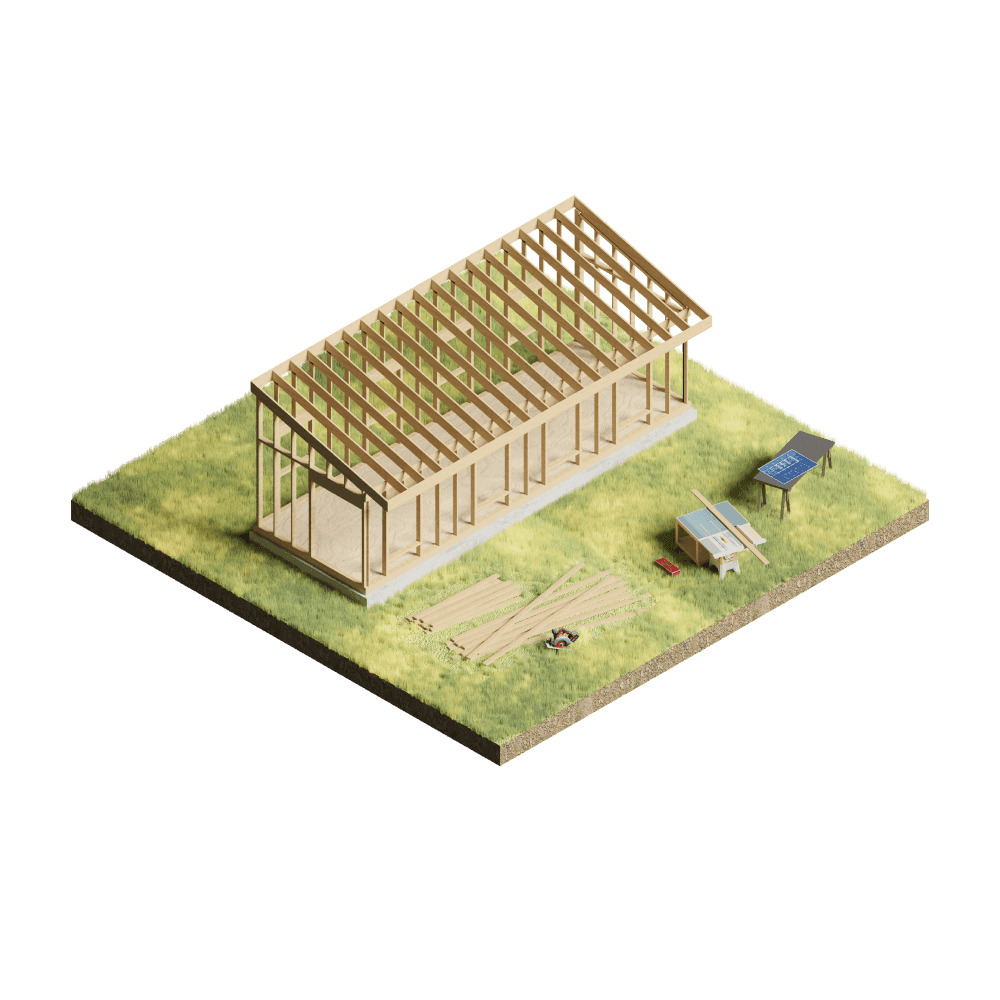
- Site preparation and foundation work
- Framing and structural assembly
- Plumbing, electrical, and HVAC installation
- Interior and exterior finishing
- Inspections
- Moving in and settling phase
- 30-day follow-up inspection
- Seasonal maintenance check-ins
- Warranty service as needed
- Future upgrade opportunities
Skip the hassle with Type Five
Our turnkey approach makes it a breeze to avoid the complex process of designing, permitting, and building your backyard home. With us, you'll reduce costs, avoid delays, and get your project done faster.
Alameda's ADU Regulations
Frequently asked questions about what you can build in Alameda, based on state and local regulations.
Feasibility
Can I build an ADU on my property in Alameda?
Accessory Dwelling Units (ADUs) in Alameda are allowed under state law, and a single-family home may construct at least one ADU. ADUs are allowed on residential properties that have an existing or proposed single-family home or an existing multi-family building.
Do I need a permit for an Alameda ADU?
Yes, a permit is required to construct an Accessory Dwelling Unit (ADU) in Alameda. The permit process will vary depending on the type of ADU you are constructing and the regulations in place in your specific location. At Type Five, we handle the entire permit process for you.
Is there a minimum lot size for an Alameda ADU?
No, there is no minimum lot size requirement for an Accessory Dwelling Unit (ADU) in Alameda. According to the city's ADU ordinance, ADUs are allowed on properties with residential uses, regardless of the size of the property. This means that you can build an ADU on your property, even if it is small or has a small lot size.
With Type Five, you can design an ADU to fit whatever available space you have in your backyard. Our system can flex and adapt to ensure you can build high-quality livable space even if it's in a smaller area. Get started with designing your ADU here.
Permitting
How long does it take to get a permit for an Alameda ADU?
The length of time it takes to obtain a permit for an Accessory Dwelling Unit (ADU) in Alameda will vary depending on several factors, such as the complexity of the project, the availability of city staff to review and approve the permit application, and whether the ADU meets the requirements of the city's ADU ordinance. In general, it is recommended that you allow at least several weeks to several months for the permit process.
At Type Five, we take care of your entire permit process. Our ADU plans meet the highest construction and building code standards across California, ensuring that our permits are approved in the shortest time possible.
Design
How many ADUs can I have in Alameda?
According to the city's ADU ordinance, single-family properties may have one ADU and one Junior ADU (JADU), while multi-family properties may have up to 25% of their existing primary dwelling units as ADUs, with a minimum of one ADU per property. ADUs that do not meet the requirements of the ADU ordinance may be subject to different regulations.
Is there a minimum and maximum size for an Alameda ADU?
Yes, there are the minimum and maximum size requirements for Accessory Dwelling Units (ADUs) in Alameda. According to the city's ADU ordinance, the maximum size of an ADU depends on the type of ADU you are interested in building. For example, the maximum size of a detached ADU on your property will be different than the maximum size of an attached ADU on your property. In general, the maximum size for a detached ADU is 800 square feet, while the maximum size for an attached ADU is 850 square feet for a studio or one-bedroom unit and 1,000 square feet for a unit with more than one bedroom.
Type Five's ADUs can adapt to various sizes to fit your needs. Get started with designing yours here.
Can you build a 2 story Alameda ADU?
In general, you should be able to build a two-story Accessory Dwelling Unit (ADU) in Alameda, provided that it meets the city's regulations for ADUs. In Alameda, the maximum height for an attached ADU is 16 feet, and the maximum height for a detached ADU is also 16 feet. However, detached ADUs that are located partially or entirely above a garage may be allowed to extend up to 18 feet in height in certain circumstances.
Type Five offers a two-story model that fits Alameda's requirements.
How many bedrooms can an ADU have in Alameda?
According to California state law, there is no limit to the number of bedrooms an ADU can have in the city of Alameda. The California HCD ADU handbook states that a limit on the number of bedrooms could be construed as a discriminatory practice towards protected classes, such as familial status, and would be considered a constraint on the development of ADUs.
How close to the property line can I build an Alameda ADU?
According to the city's ADU ordinance, attached and detached ADUs must be located at least 4 feet from the side and rear property lines. Conversion ADUs and junior ADUs, which are ADUs that are created by converting existing space within a single-family dwelling or an accessory structure, are not required to meet minimum setback requirements if the existing structure complies with the city's setback requirements.
Utilities
Does an ADU need its own electrical panel, water meter, or gas meter in Alameda?
It is not required for an Accessory Dwelling Unit (ADU) to have its own electrical panel, water meter, or gas meter in Alameda. However, it may be necessary depending on the size and design of the ADU and the availability of utilities on the property. In general, ADUs are not required to have new or separate utility connections, and the connection fee or capacity charge for utilities should be proportional to the burden of the ADU on the water or sewer system.
Are fire sprinklers required in an Alameda ADU?
A local agency, special district, or water company in does not require an ADU to have its own electrical panel, water meter, or gas meter in the city of Berkeley, unless the ADU was built at the same time as a new single family dwelling on the property. However, owners of ADUs that plan to be used as rental units typically install a new set of utility meters to make billing cleaner for tenants.
Is solar required on an Alameda ADU?
You may be required to install solar panels on your ADU in Alameda if your ADU is a newly constructed, non-manufactured, detached ADU. There are exceptions to the state energy code based on floor area and climate zone. In Alameda (Climate Zone 3), you can qualify for an exemption if the size of the ADU is no more than 1,000 square feet.
Financials
How much can I rent an ADU for in Alameda?
You should be able to rent an ADU in Alameda for $2,332 which is the average monthly rent for a one bedroom apartment so long as the rental term is longer than 30 days. There is no owner-occupancy requirement for ADUs built before December 31st, 2024.
Can an ADU be used as an Airbnb or short-term rental in Alameda?
It is important to note that in Alameda, short-term rentals (defined as rentals lasting less than 30 days) are generally not allowed in Accessory Dwelling Units (ADUs). However, there are some exceptions to this rule, including if the ADU is located on the property of the host's primary residence, the host is present on the property during the rental period, the rental duration is at least two nights, and certain other conditions are met. You should consult with the city of Alameda to determine if your specific situation meets the requirements for short-term rentals in ADUs.
Can your HOA prevent your ADU build in Alameda?
Your local homeowners association (HOA) cannot prohibit the construction of an ADU or JADU in Alameda. Assembly Bill 670 (2019) and AB 3182 (2020) amended Section 4751, 4740, and 4741 of the Civil Code to preclude common interest developments from prohibiting or unreasonably restricting the construction or use, including the renting or leasing of, an ADU on a lot zoned for single-family residential use.
Covenants, conditions and restrictions (CC&Rs) that either effectively prohibit or unreasonably restrict the construction or use of an ADU or JADU on such lots are void and unenforceable or may be liable for actual damages and payment of a civil penalty.
How does an ADU affect property taxes in Alameda?
Your property taxes will slightly increase based on the added value of the ADU. The base value of your property will not be reassessed. As an example, if an ADU will add $100,000 in value to your property, and your property tax rate is 1.1%, then your property tax would increase by $1,100 ($100,000 x 1.1%).
How much does it cost to build an Alameda ADU?
The average cost to build an ADU in Alameda is between $350-$412 per square foot. Keep in mind there are a ton of factors to consider when estimating the cost of a project, many of which are unique to your property and sometimes require special surveys to identify. Examples of these factors include whether or not your property is flat or sloped and whether or not you need to upgrade your utilities.
It’s also important to note that converting an existing structure or converting your garage into an ADU isn’t necessarily cheaper than building a brand-new detached ADU.
You can get an in-depth overview of what goes into the costs of building an ADU in your city by starting to customize your ADU using Type Five's design tool. Get started by going here.

Online Resources
Learn more about building in Alameda, California
City of Alameda's Planning Department Website
Alameda County's Guide to Building ADUs