The Roundabout
Berkeley, California

Roundabout is a multi-building cooperative housing community in South Berkeley, created by a group of residents who had outgrown their previous co-op, the Radish in North Oakland. The project began with King, a backyard ADU behind an existing duplex, and expanded when the group purchased the vacant adjacent parcel and commissioned Woolsey, a new duplex. Together, the existing duplex, King, and Woolsey create a five-unit residential community across two adjacent parcels. The project uses recent ADU legislation and Berkeley’s Missing Middle Housing Ordinance to add three new homes while supporting a larger shared living environment organized around common amenities, outdoor space, and long-term community.
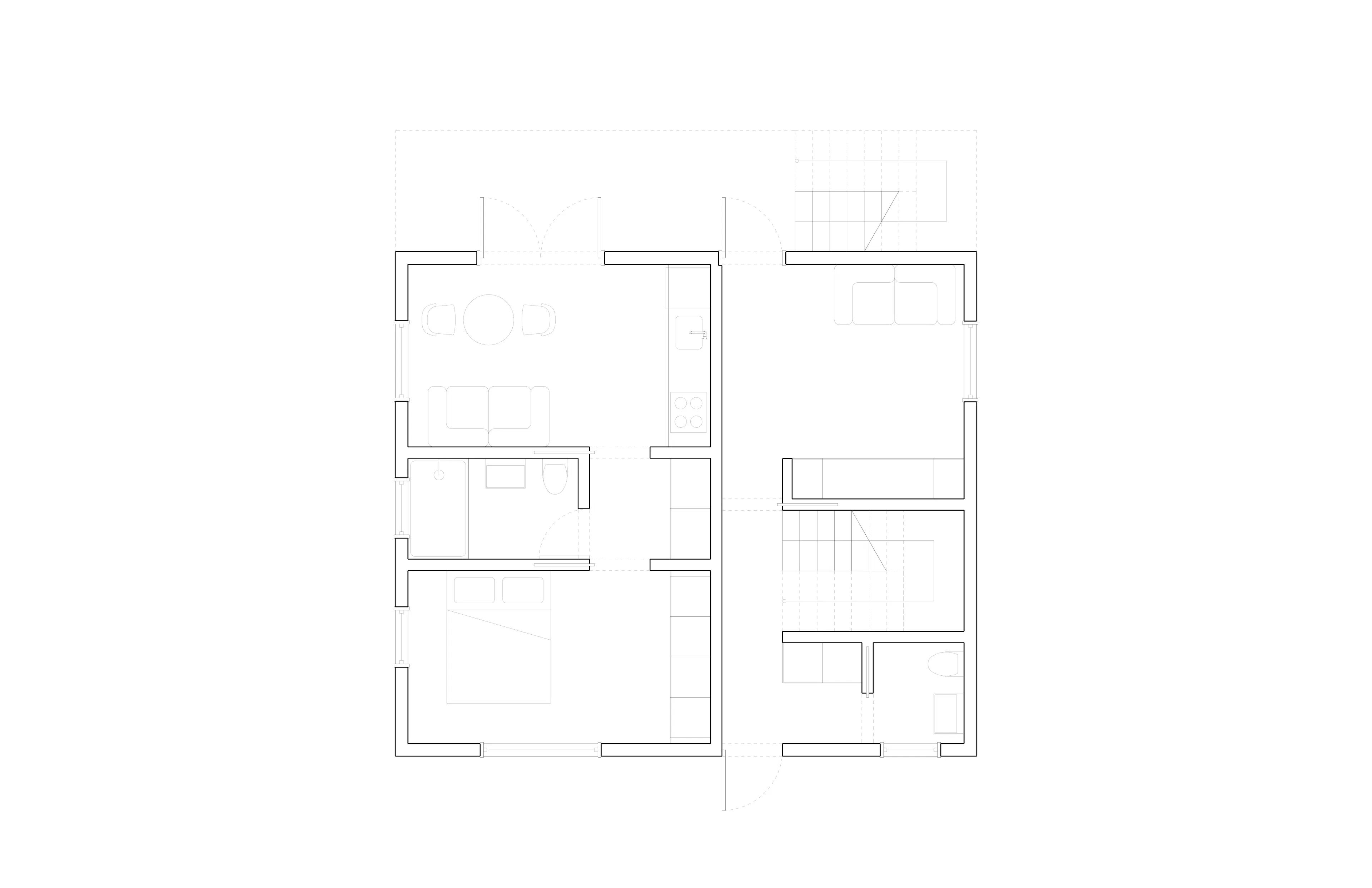
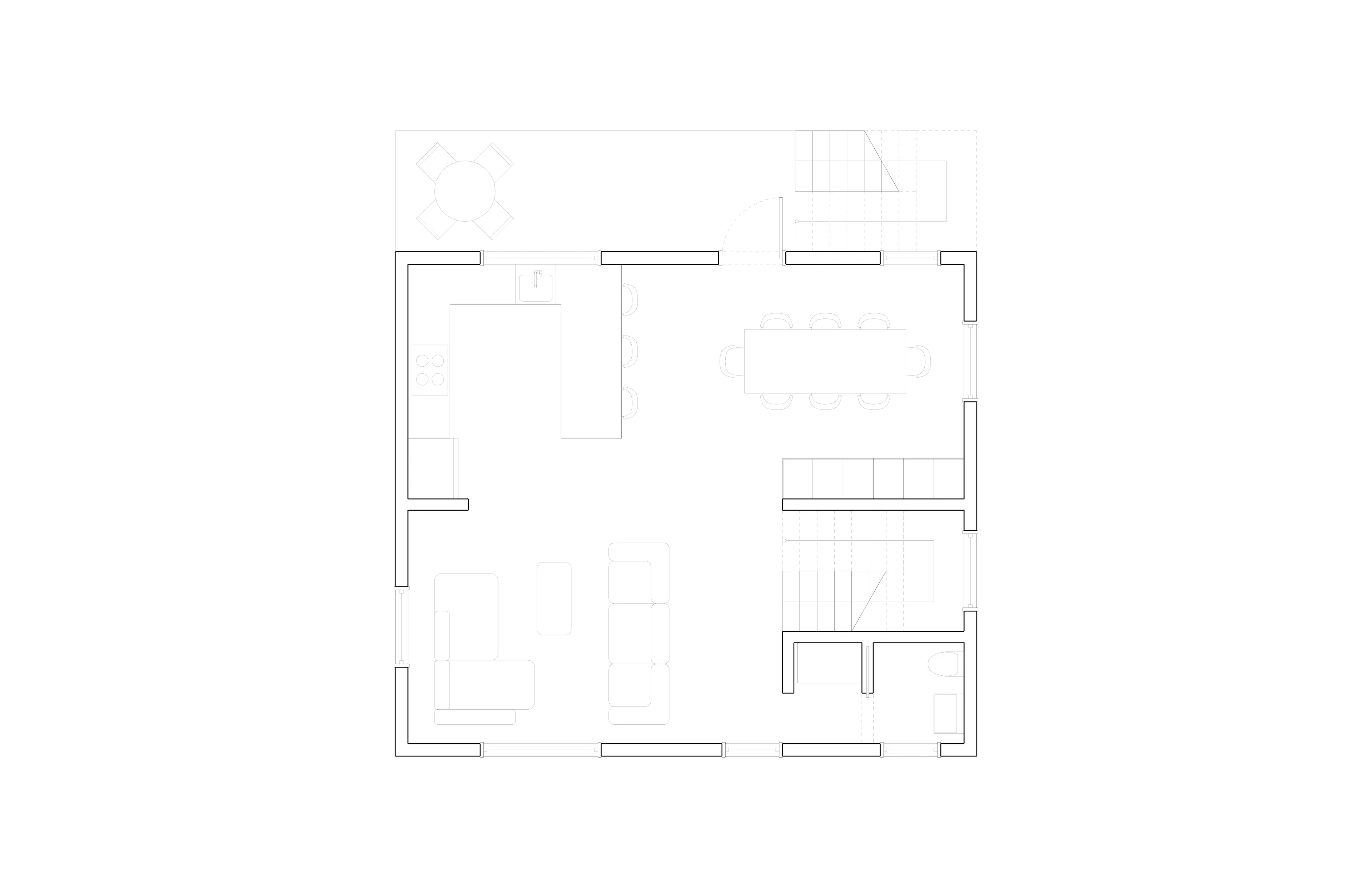
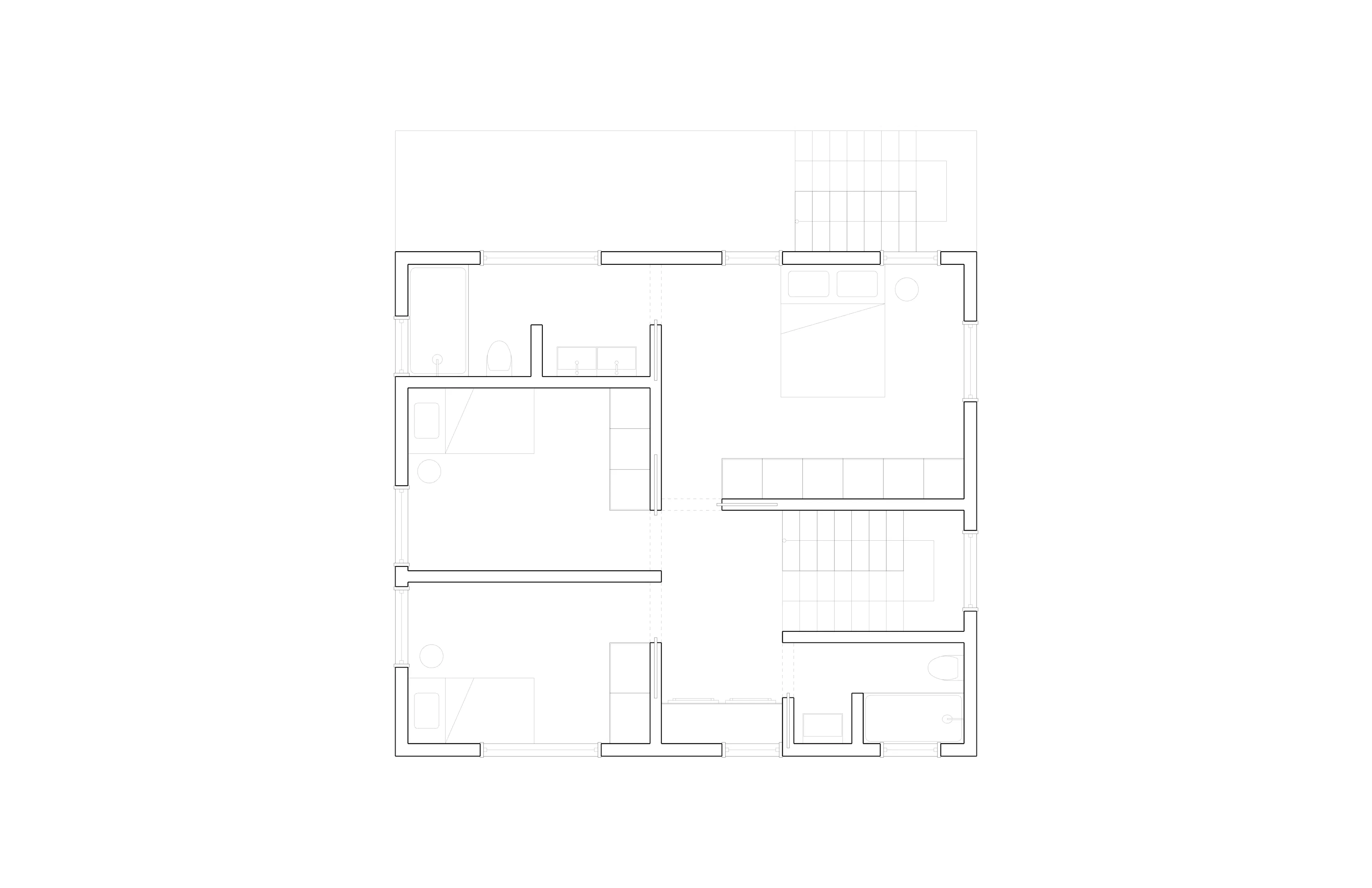
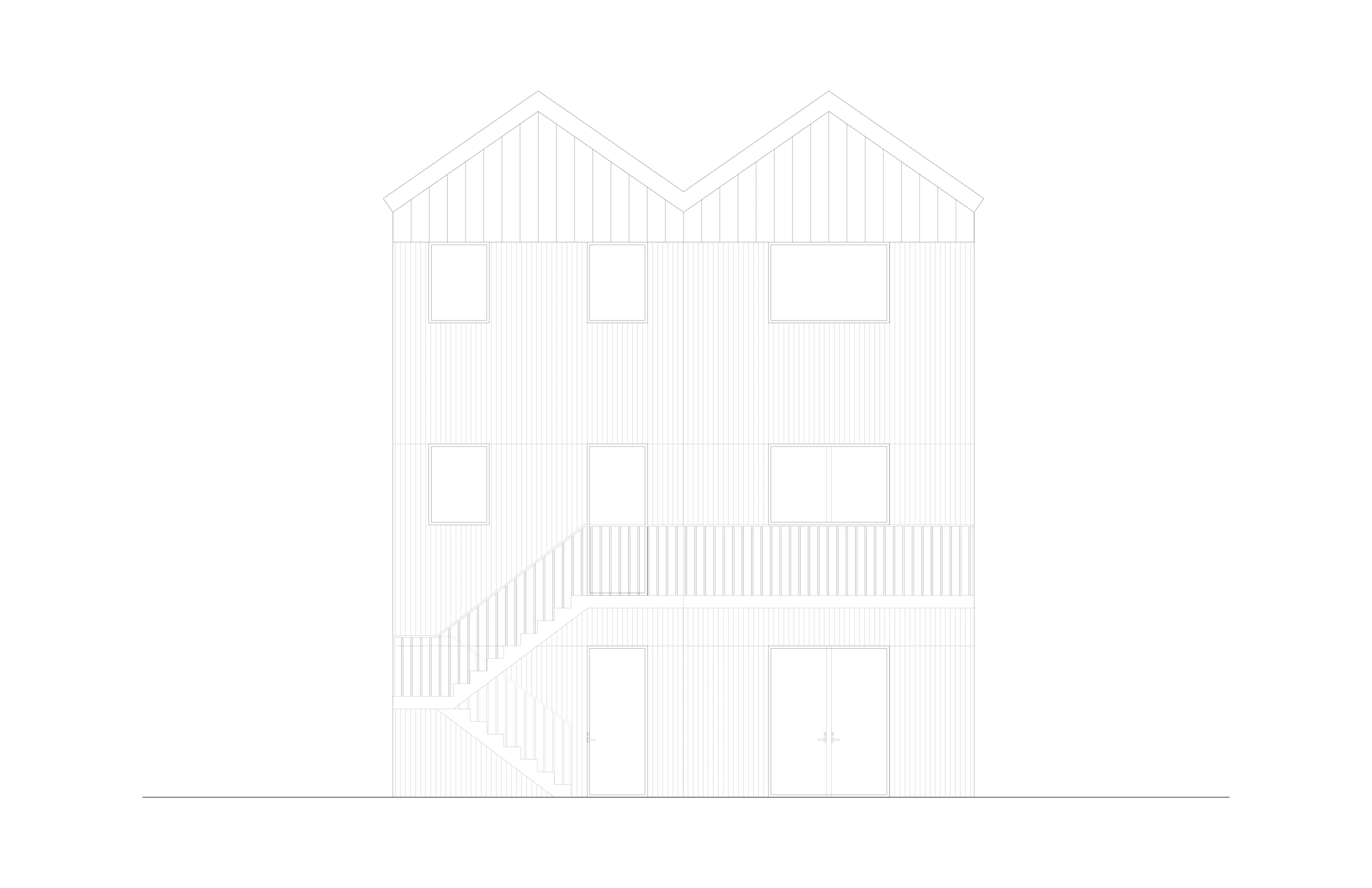
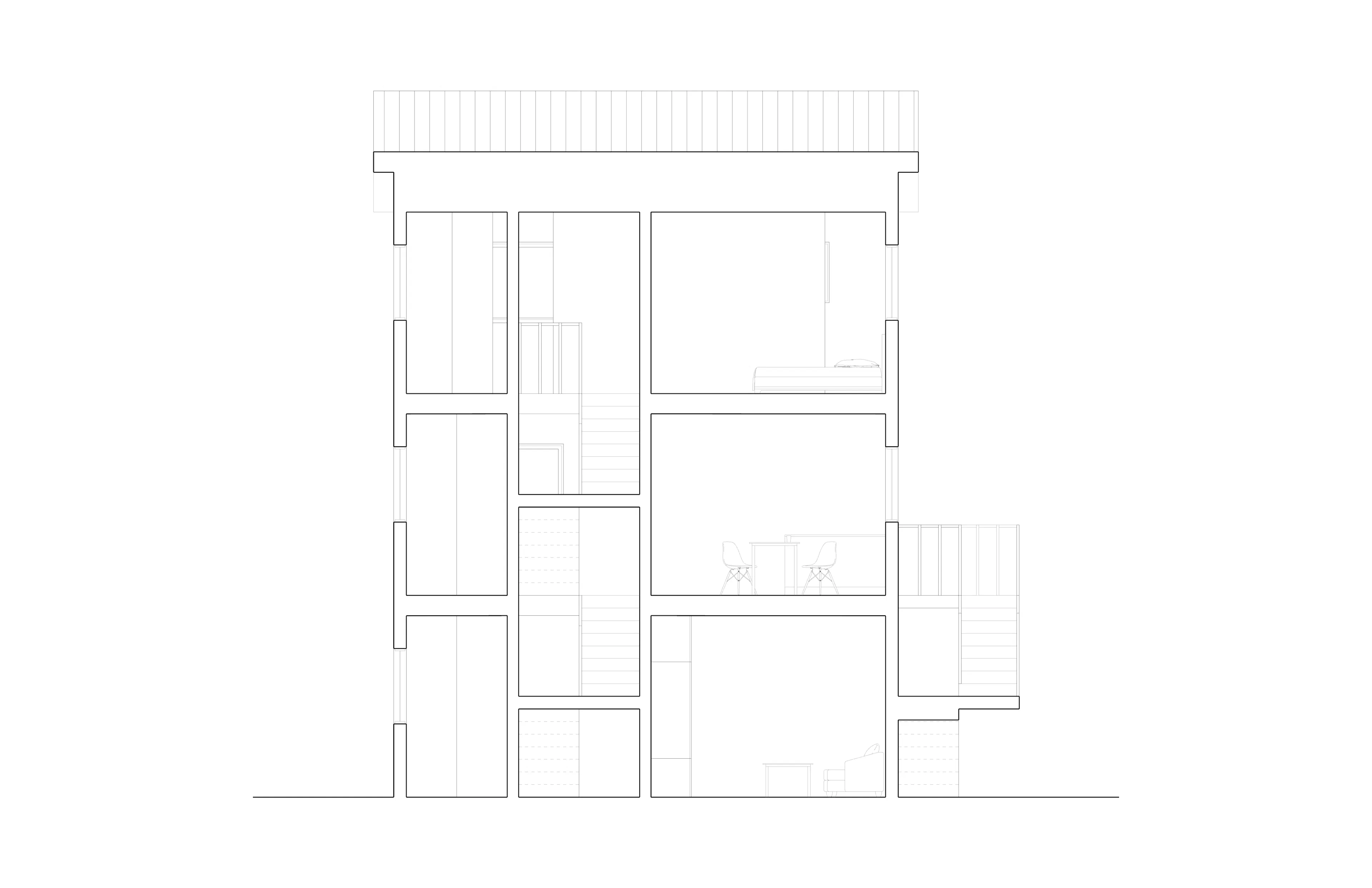
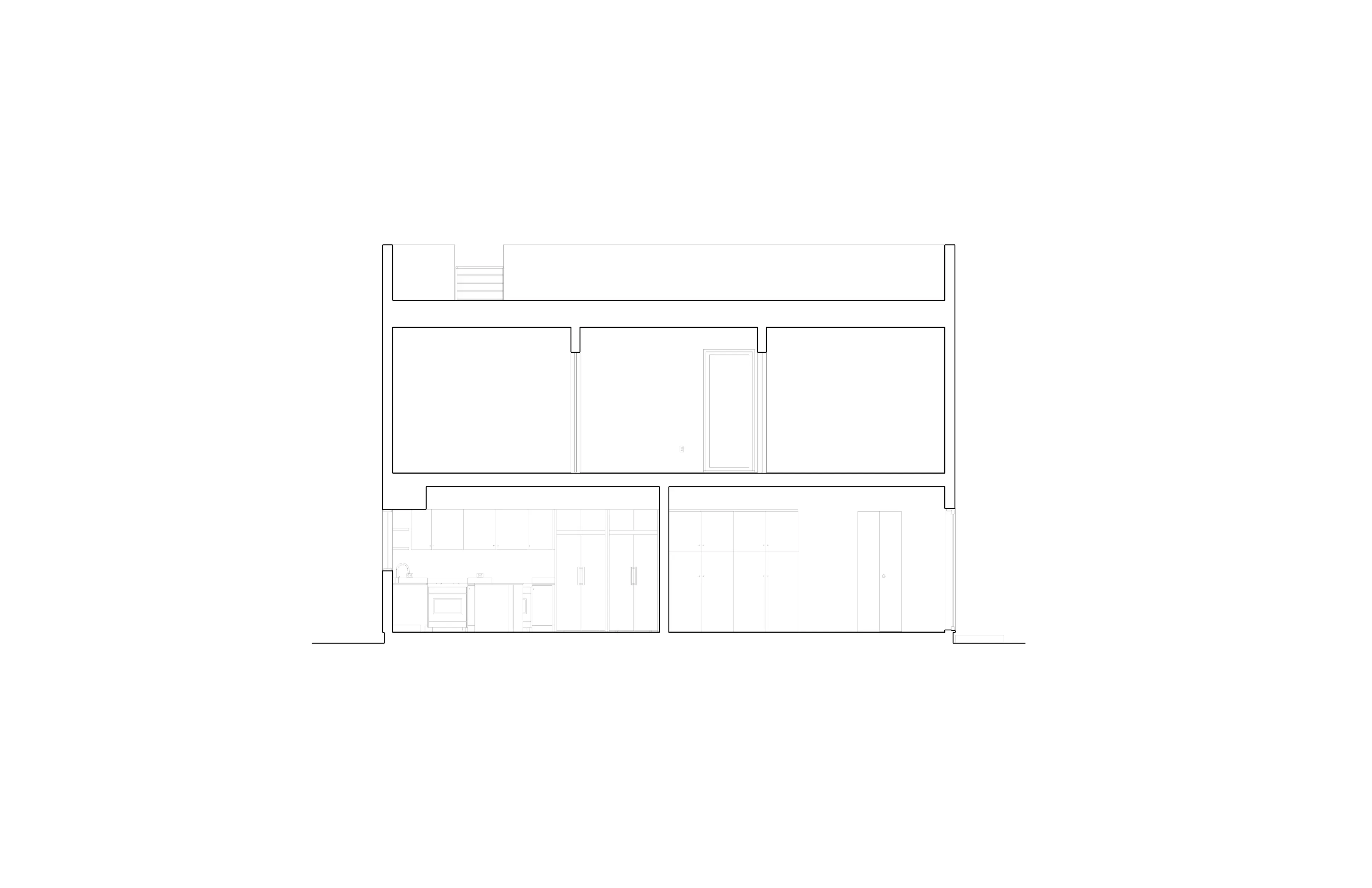
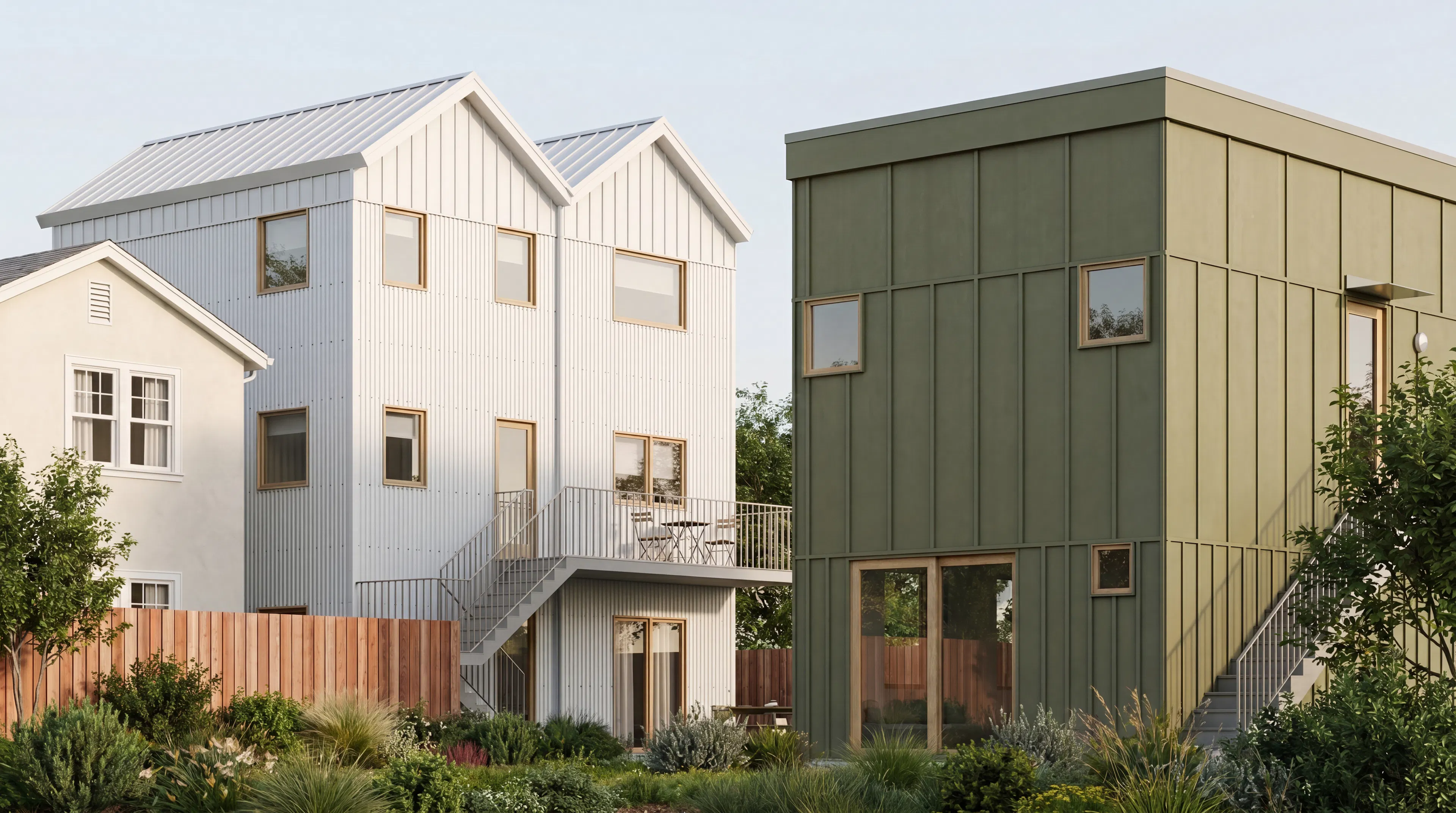
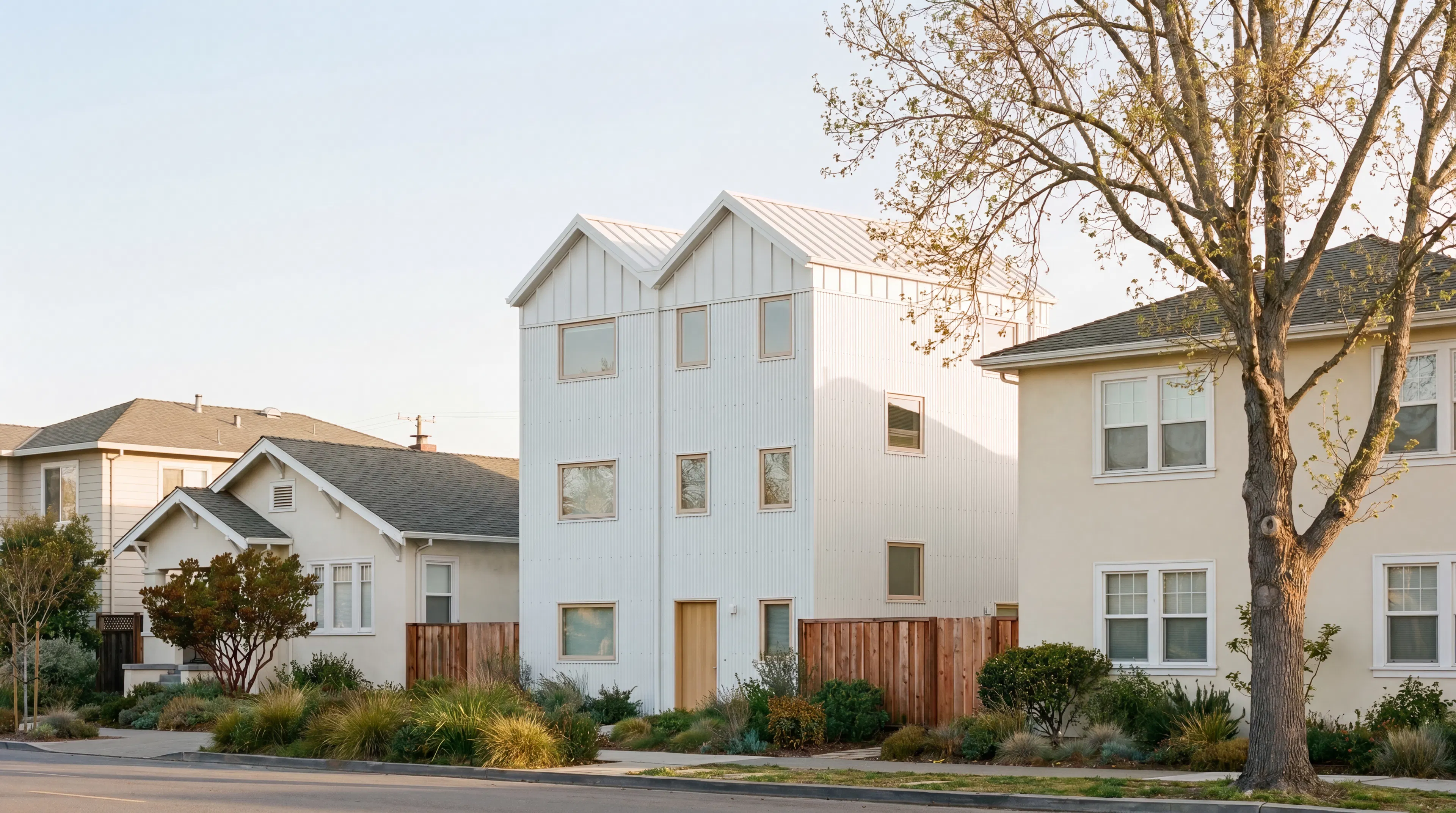
Roundabout combines an existing duplex, a new backyard ADU, and a new missing-middle duplex into a shared residential compound. King includes a two-bedroom apartment above a large common kitchen and living space, while Woolsey adds a three-bedroom home and a ground-floor two-bedroom apartment on the adjacent parcel.
Details
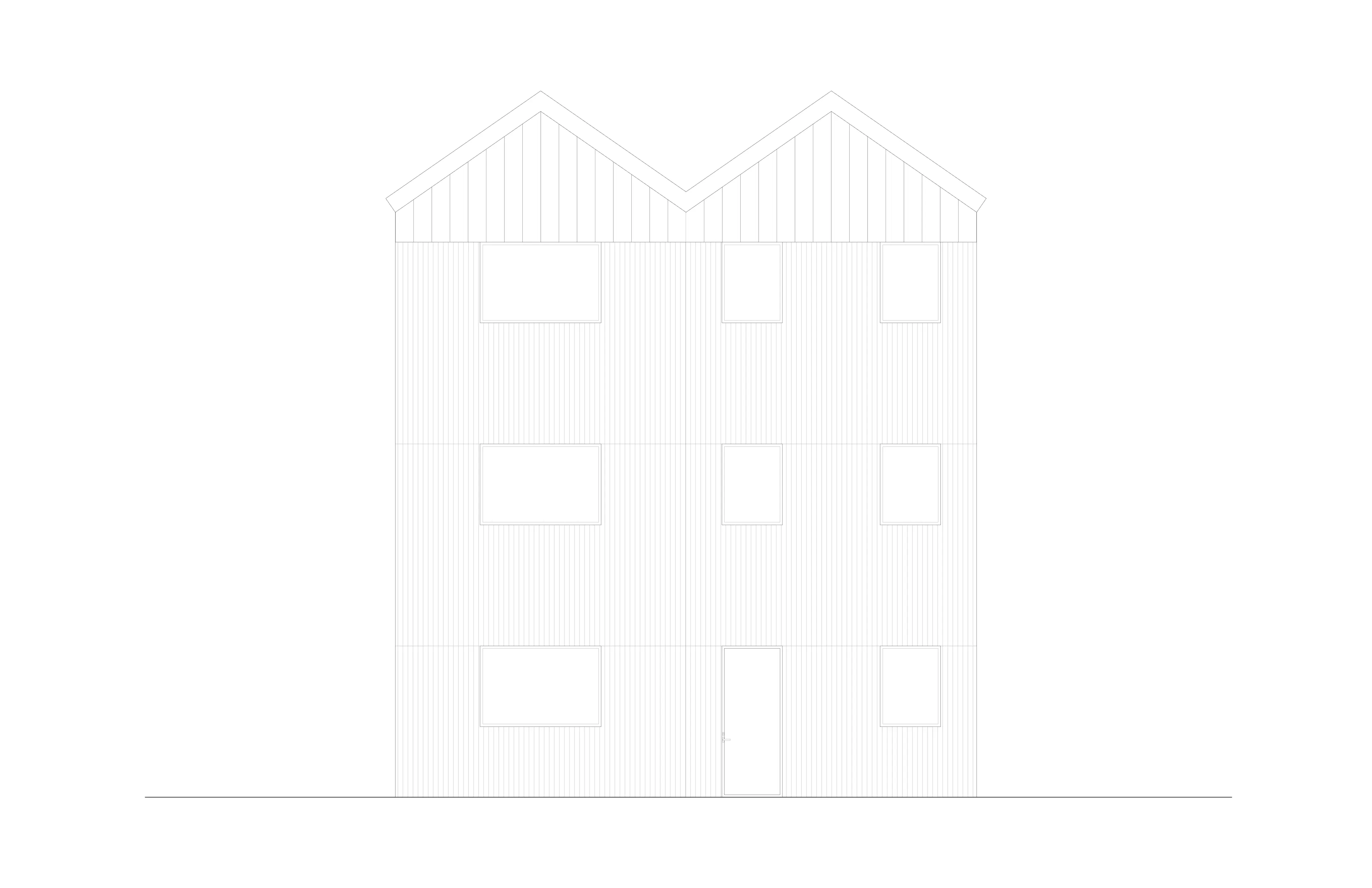
- Woolsey:
- 2,160 square feet
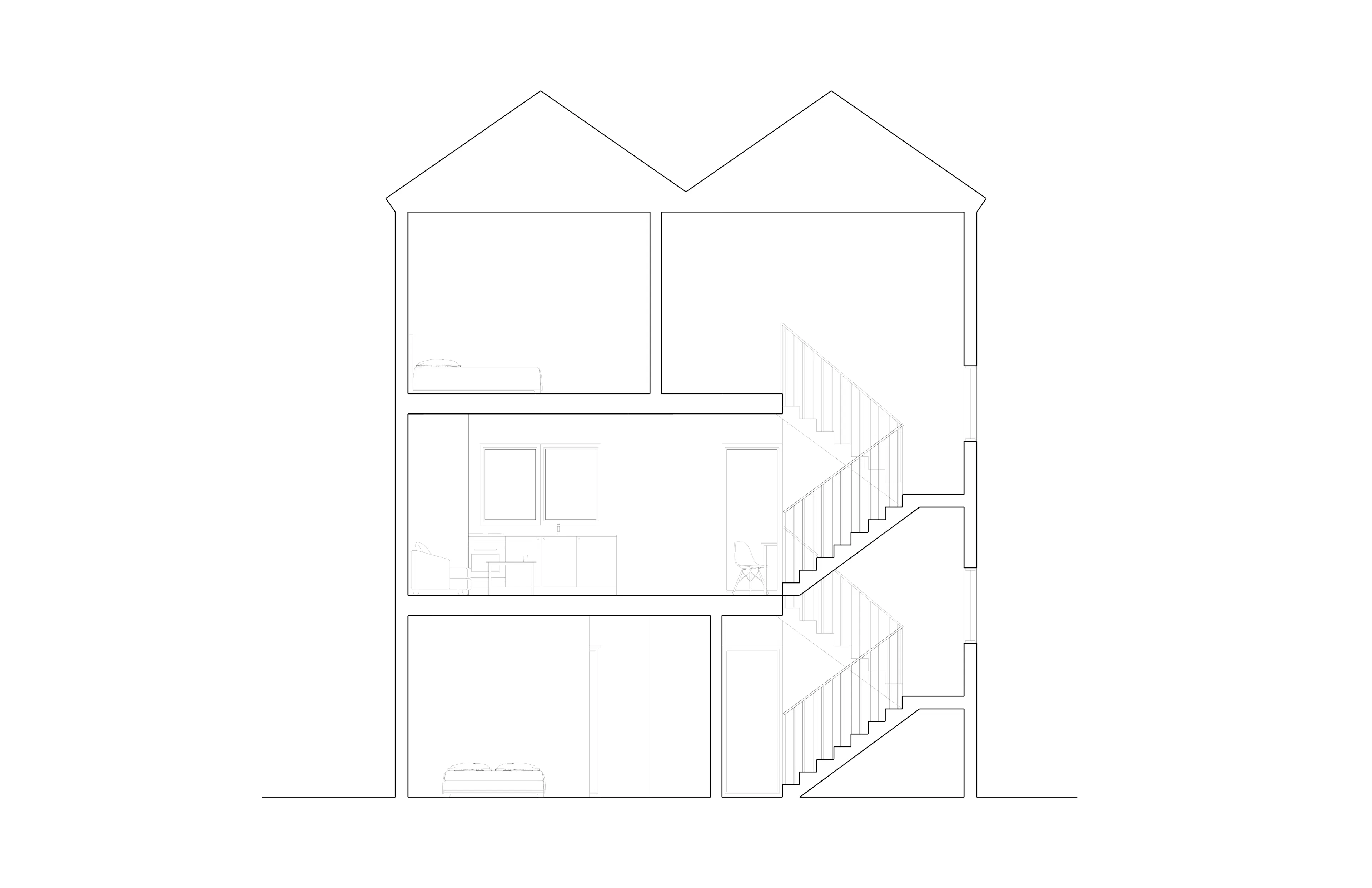
- Three-story layout
- One-bedroom ground floor apartment
- Three-bedroom, three-bathroom primary unit
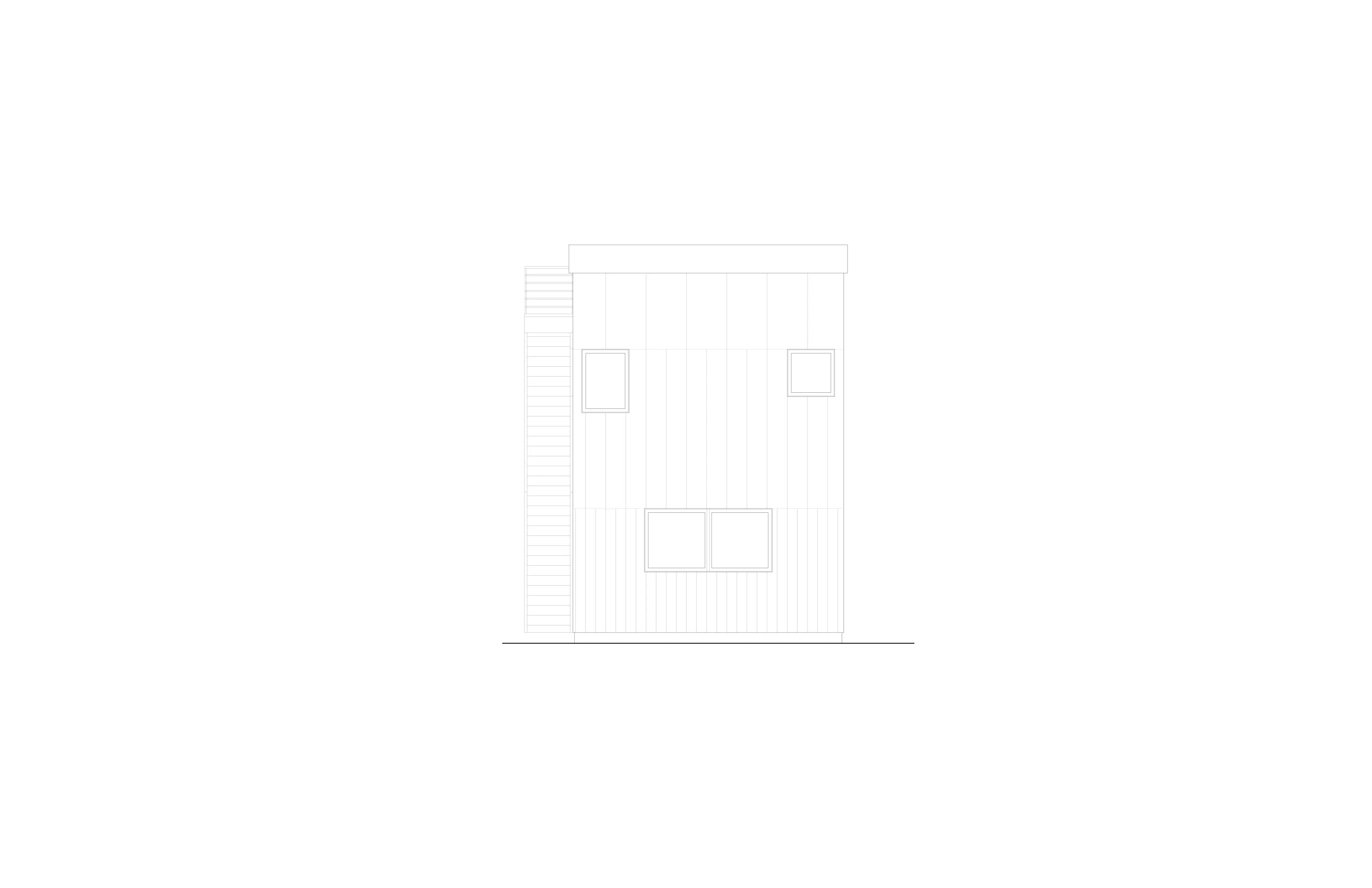
- Large attached balcony with exterior staircase
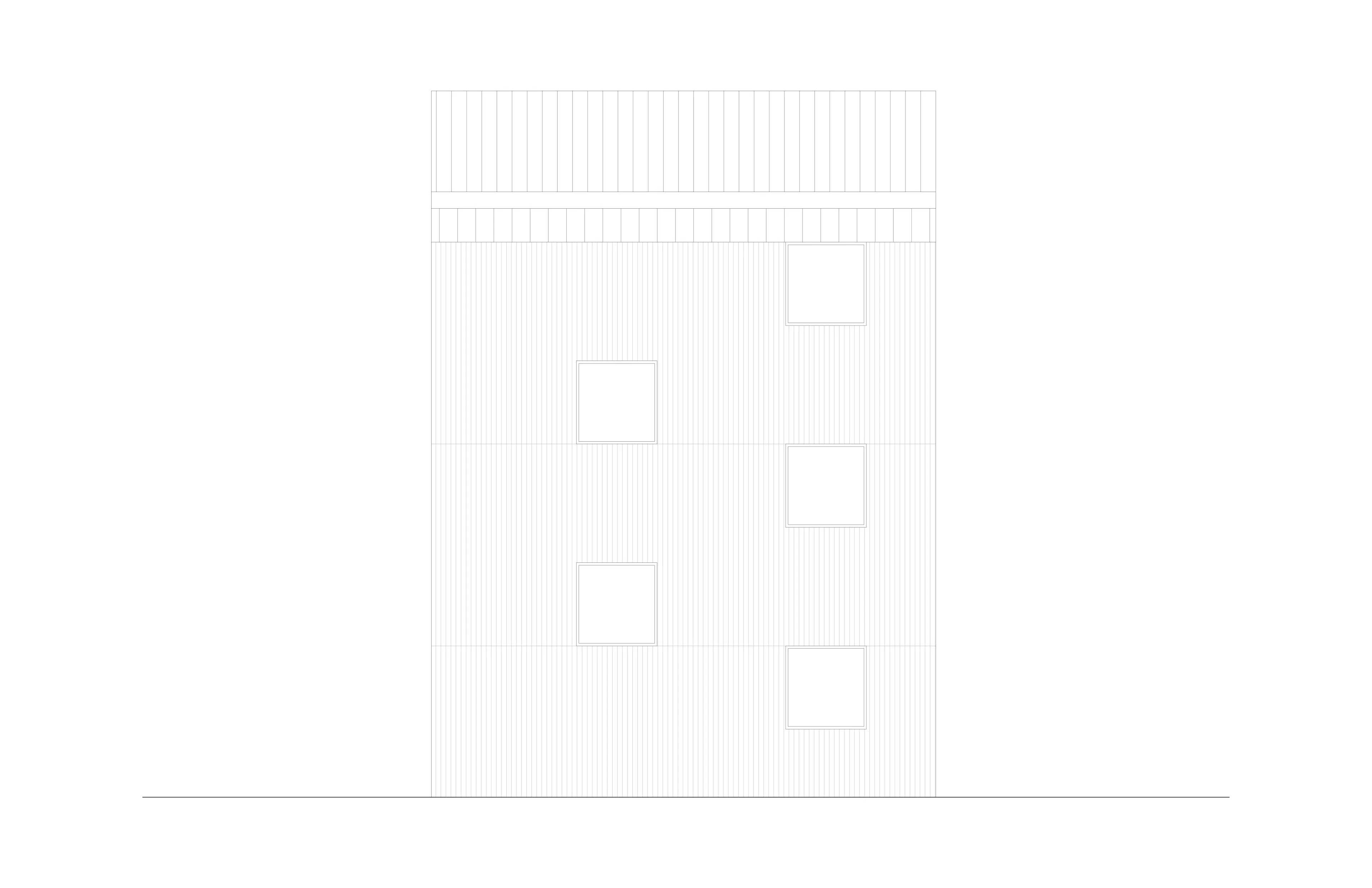
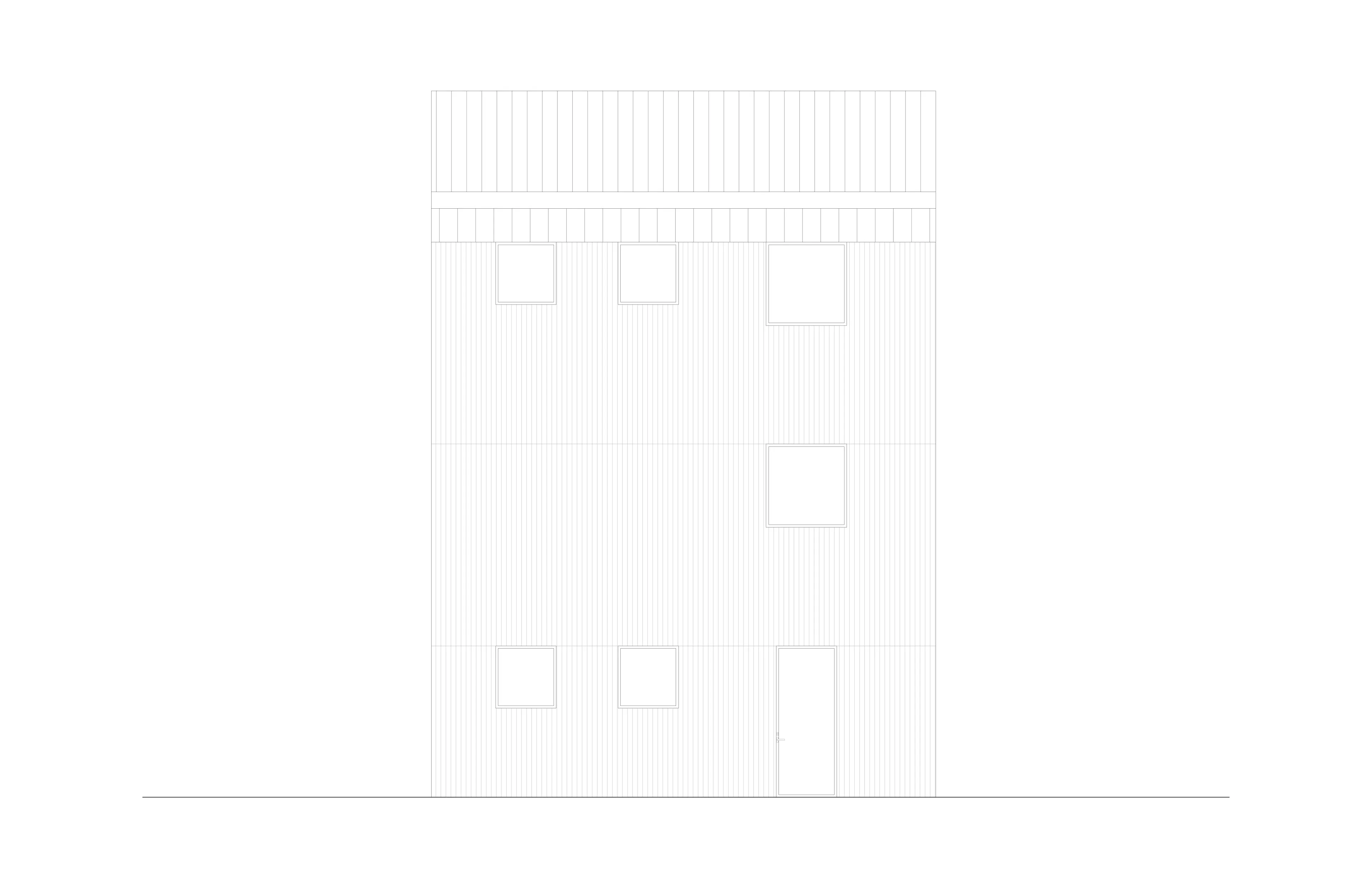
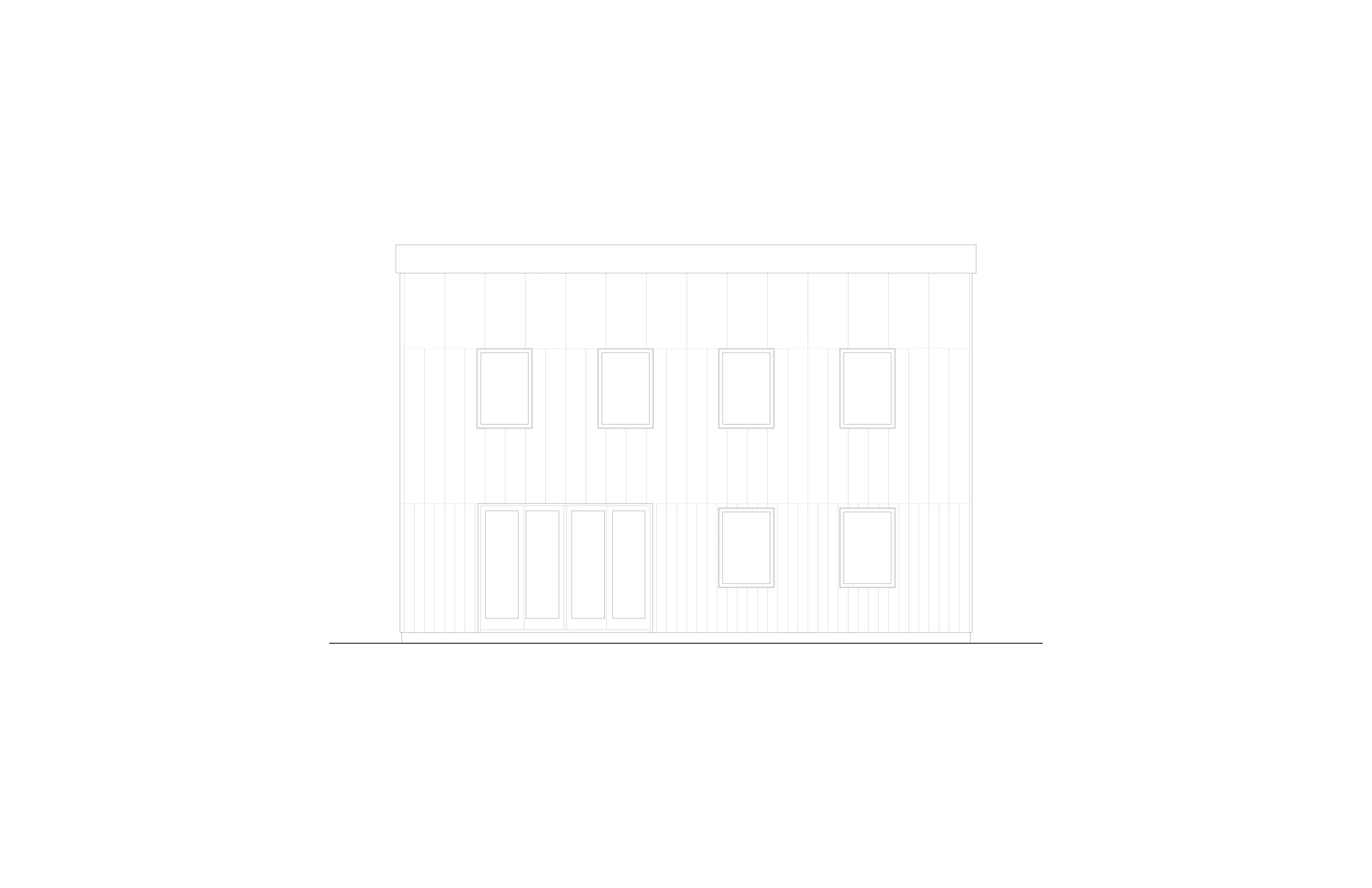
- Corrugated and standing-seam metal siding
- King:
- 1,200 square feet
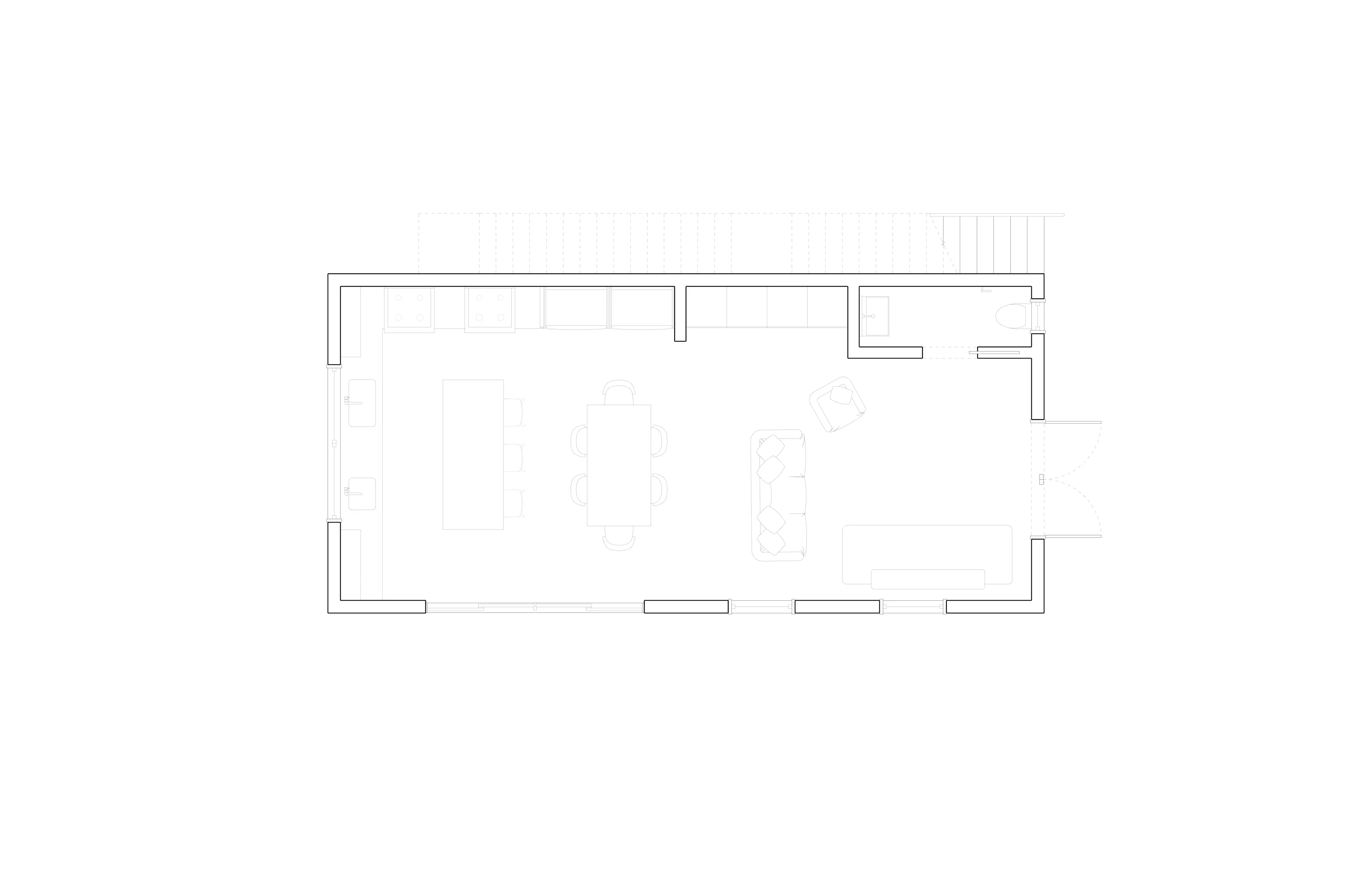
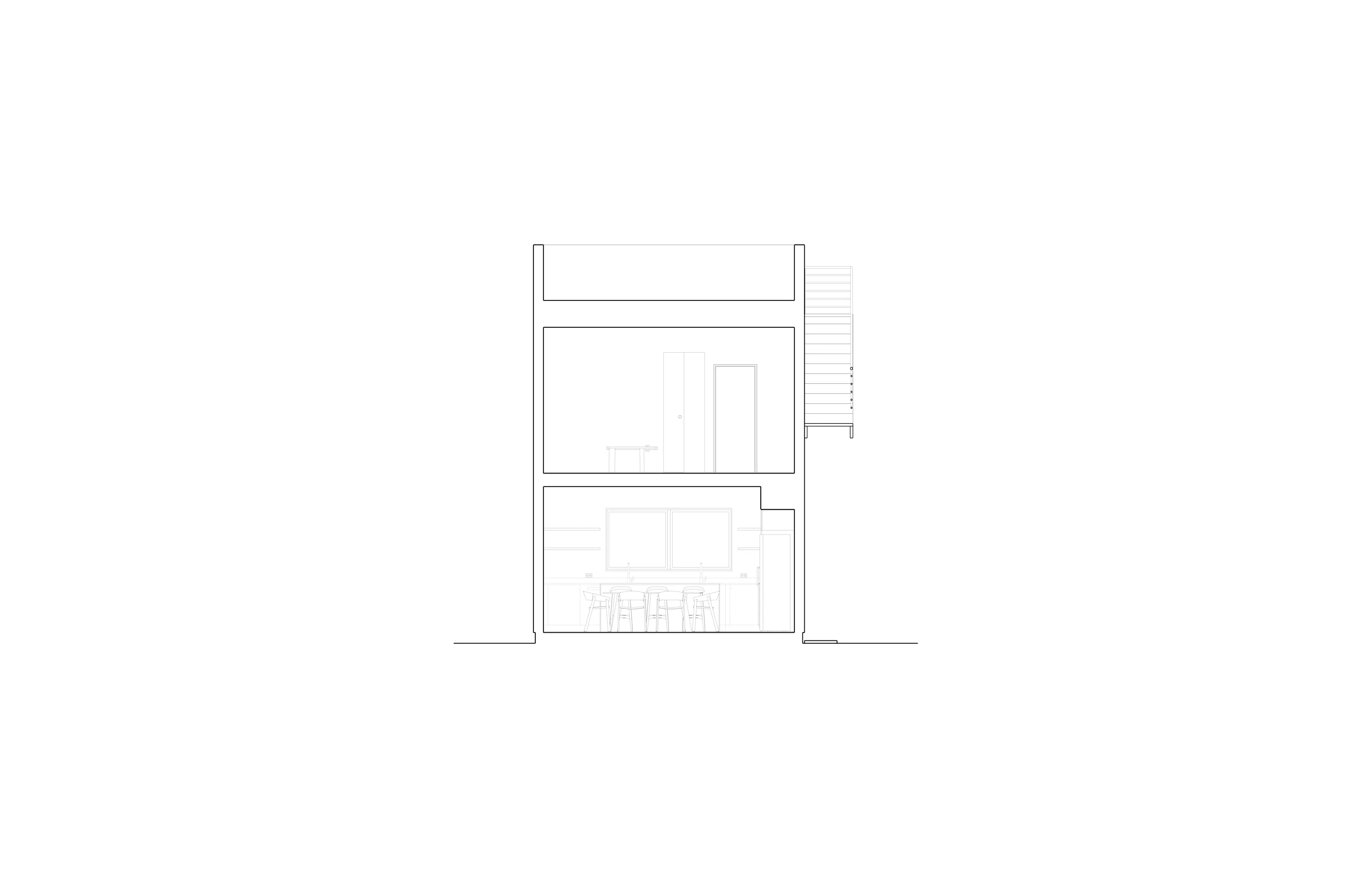
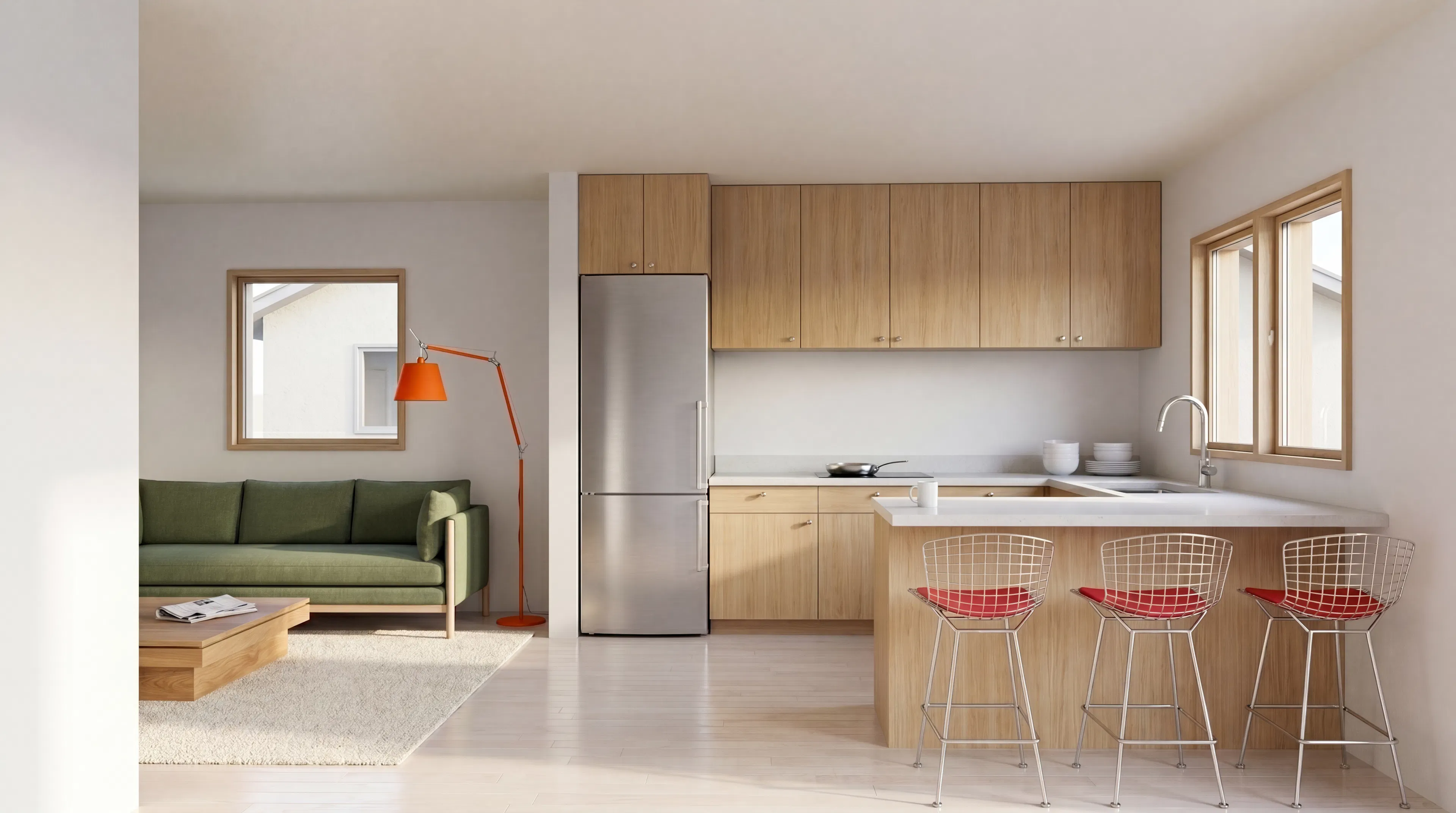
- Large ground-floor communal kitchen and living area
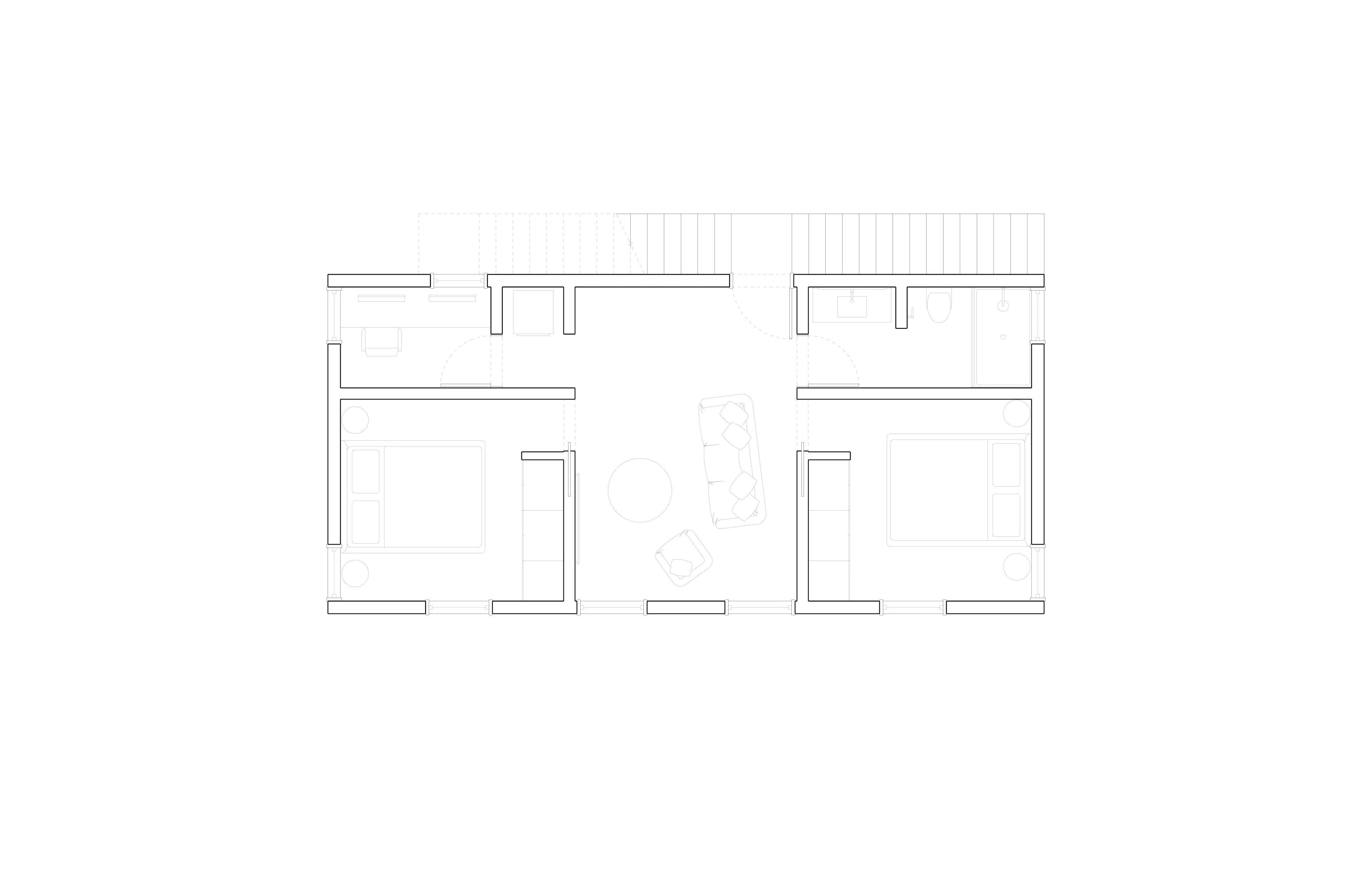
- Upstairs two-bedroom, one bathroom apartment
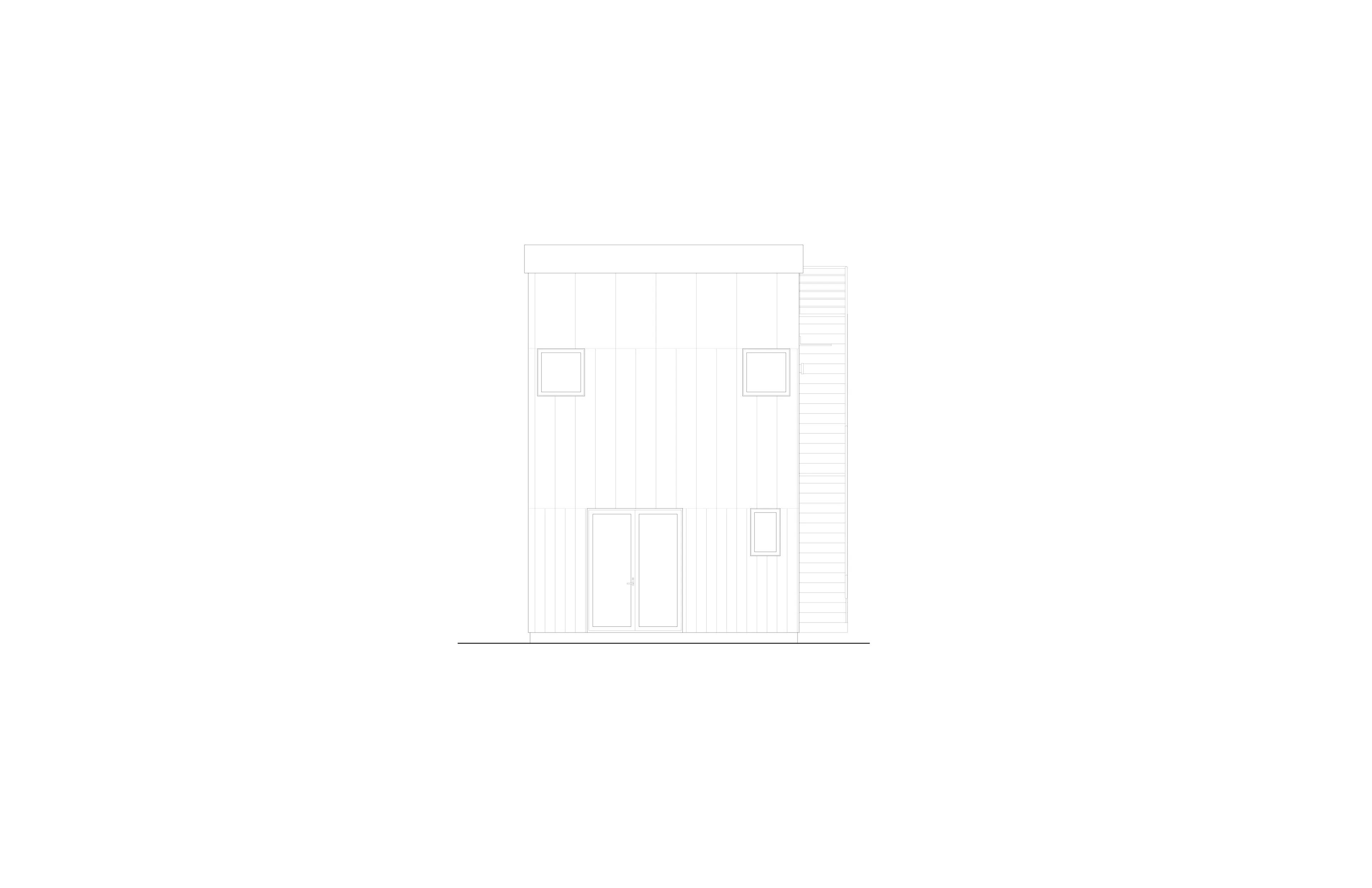
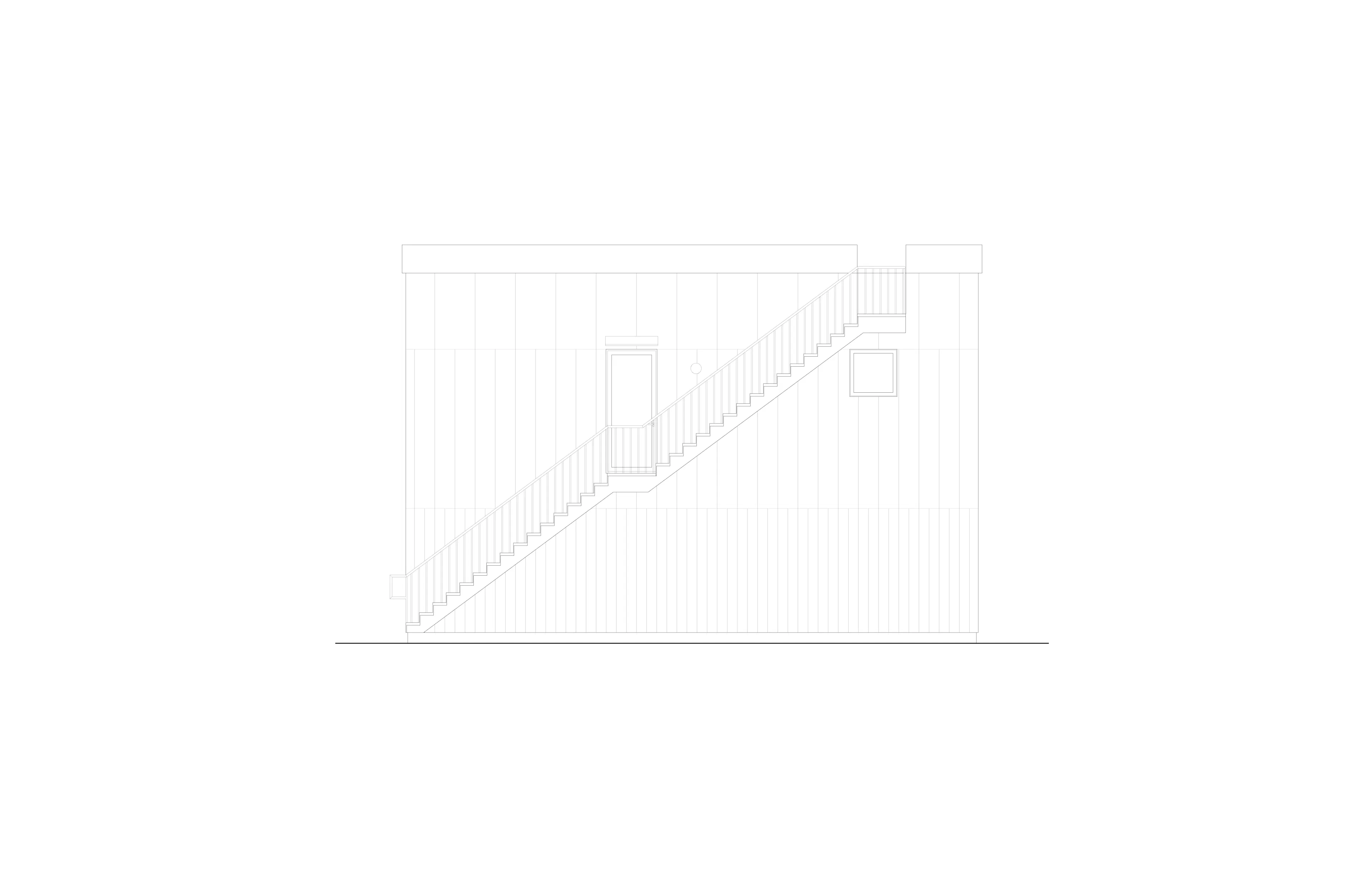
- Exterior staircase
- Large roof deck
- Board-and-batten siding
The clients are a group of residents who had outgrown their previous home, a co-op called the Radish in North Oakland. They were not simply looking for more square footage; they were looking to build a new cooperative community in South Berkeley with enough flexibility to support multiple households, shared amenities, and a broader social life.
The first project, King, was conceived as both a dwelling unit and a shared resource for the larger community. Its upper floor contains a two-bedroom apartment, while the ground floor includes a large kitchen and common living area. A roof deck with a hot tub and outdoor shower extends the shared life of the project upward, creating an additional outdoor room for the community.
When the adjacent vacant parcel became available, the project grew from a backyard ADU into a larger neighborhood-scale housing strategy. Woolsey adds two more homes: a larger three-bedroom residence and a ground-floor two-bedroom apartment. These units create more ways for residents to live within the community while maintaining separate households.
The resulting compound is organized around shared outdoor areas and common amenities rather than isolated buildings. Roundabout uses multiple housing types to support a cooperative way of living: private units, common space, flexible outdoor areas, and a larger sense of collective ownership across two adjacent parcels.
Roundabout’s entitlement strategy developed in phases. The project began with King, a backyard ADU behind an existing Berkeley duplex. California’s ADU laws provided a relatively direct path for adding one new dwelling unit, while the design also allowed the ADU to serve the broader community through its ground-floor common space.
The opportunity changed when the clients purchased the vacant adjacent parcel. A new single-family home would have been possible, but we advised the clients that a duplex would be both a stronger housing outcome and a more efficient permitting strategy under recent local and state legislation.
Woolsey was designed under Berkeley’s Missing Middle Housing Ordinance, which created a ministerial path for small multifamily housing in residential neighborhoods. By framing the project as a duplex rather than a single-family home, the design aligned with Berkeley’s policy direction and received planning approval in one month.
Together, King and Woolsey show how different infill tools can be layered across neighboring parcels. ADU law made it possible to add one new home and shared amenities behind the existing duplex. Berkeley’s missing-middle ordinance made it possible to add two more homes on the adjacent vacant lot. The combined strategy turns two parcels into a five-unit cooperative community while remaining within a small-scale residential fabric.